Knowing your skin type makes every skincare choice easier — which cleanser, how rich a moisturiser, how often to use an active serum. The good news: you can find out at home in about an hour.
The bare-face test
- Wash your face with a gentle cleanser and pat it dry.
- Don’t apply anything — no serum, moisturiser or makeup.
- Wait about an hour, staying out of direct heat if you can.
- Look in the mirror and notice how your skin feels.
Reading the results
- Dry: skin feels tight, may look dull or flaky, and drinks up moisturiser.
- Oily: shine across the whole face, especially forehead, nose and chin.
- Combination: shiny in the T-zone (forehead, nose, chin) but normal or dry on the cheeks.
- Normal: comfortable — not tight, not shiny.
“Sensitive” is a condition, not a type
Any skin type can be sensitive. Signs include stinging, burning, itching or redness after using products — on deeper skin tones, irritation may show as darker or ashy patches rather than redness. If this sounds like you, introduce one new product at a time and patch test first.
Your skin changes — and that’s normal
Climate, hormones, pregnancy, stress and age can all shift how your skin behaves. Dar es Salaam’s humidity may make skin feel oilier than it does in a cooler, drier place. Repeat the test every few months, or whenever your skin starts to feel different.
A note for melanin-rich skin
Deeper skin tones are more prone to dark marks after breakouts or irritation (post-inflammatory hyperpigmentation). Gentle products, not picking, and daily sunscreen go a long way in keeping tone even.
What it means for your routine
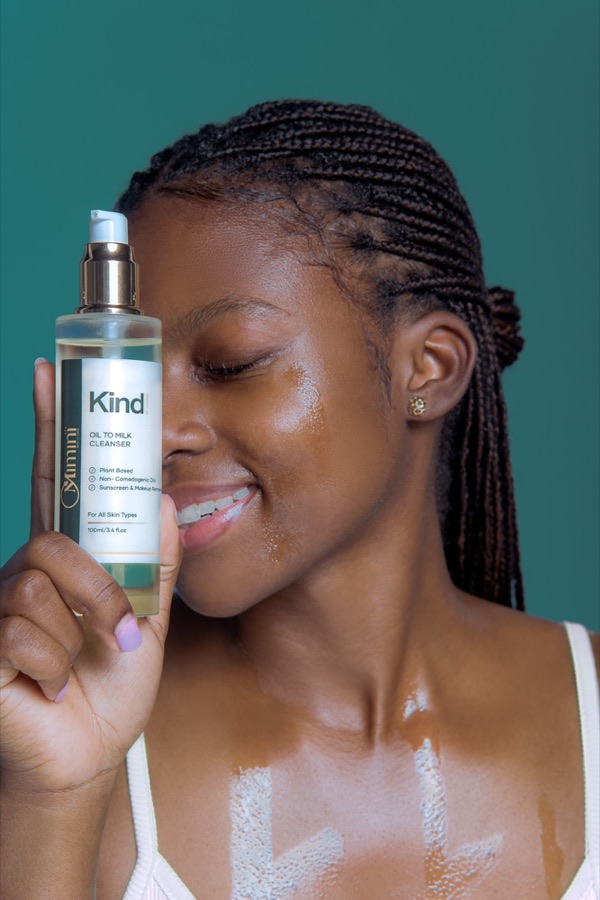
Whatever your type, the basics stay the same: cleanse gently, treat if you need to, moisturise, and protect with sunscreen in the day. Our Kind! Oil to Milk Cleanser and Tanzanite Glow Antioxidant Oil Serum are both made for all skin types.
If you have ongoing breakouts, patches or irritation that don’t settle, please see a doctor or dermatologist — skin deserves expert care too.